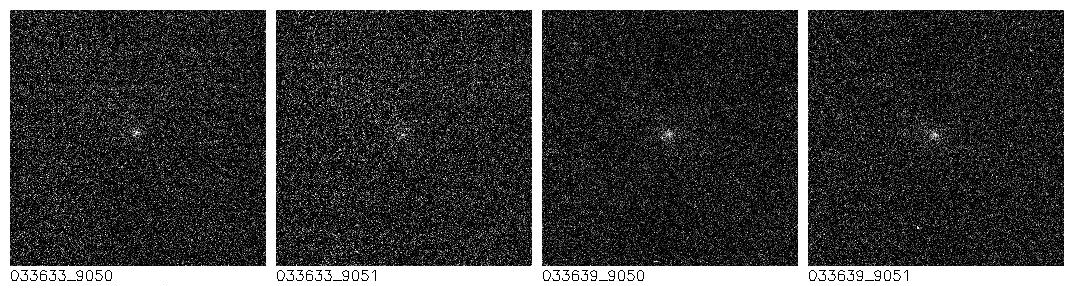
Comet ISON photos from Mars. Credits: NASA/JPL/University of Arizona
New images were released today from the High Resolution Imaging Science Experiment (HiRISE) camera on board the Mars Reconnaissance Orbiter (MRO).
From HiRISE’s perspective, ISON appears very faint within the image.
These images show a 256 x 256 pixel patch of sky at the range to the comet of 8 million miles and when the solar phase angle is 47 degrees. Three more observations of ISON are planned for 1 and 2 October as the comet moves through closest approach to Mars at 7 million miles, but with less illumination as seen from Mars.
Based on preliminary analysis of the data, the comet appears to be at the low end of the range of brightness predictions for the observation. As a result, the image isn’t visually pleasing but low coma activity is best for constraining the size of the nucleus. This image has a scale of approximately 8 miles (13.3 km) per pixel, larger than the comet, but the size of the nucleus can be estimated based on the typical brightness of other comet nuclei. The comet, like Mars, is currently 241 million kilometers from the Sun. As the comet gets closer to the sun, its brightness will increase to Earth-based observers and the comet may also become intrinsically brighter as the stronger sunlight volatilizes the comet’s ices.
Basically, the design intent of HiRISE was for looking at the surface of Mars, and not for looking at distant objects beyond Phobos or Deimos, the moons of Mars. When ISON was imaged, it was around 10.8 million kilometers away from the surface of Mars.
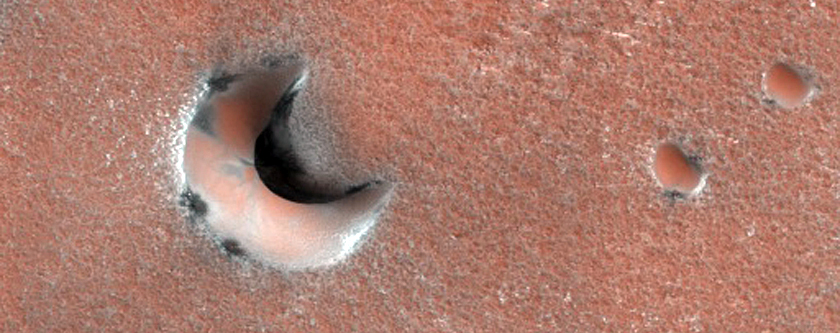
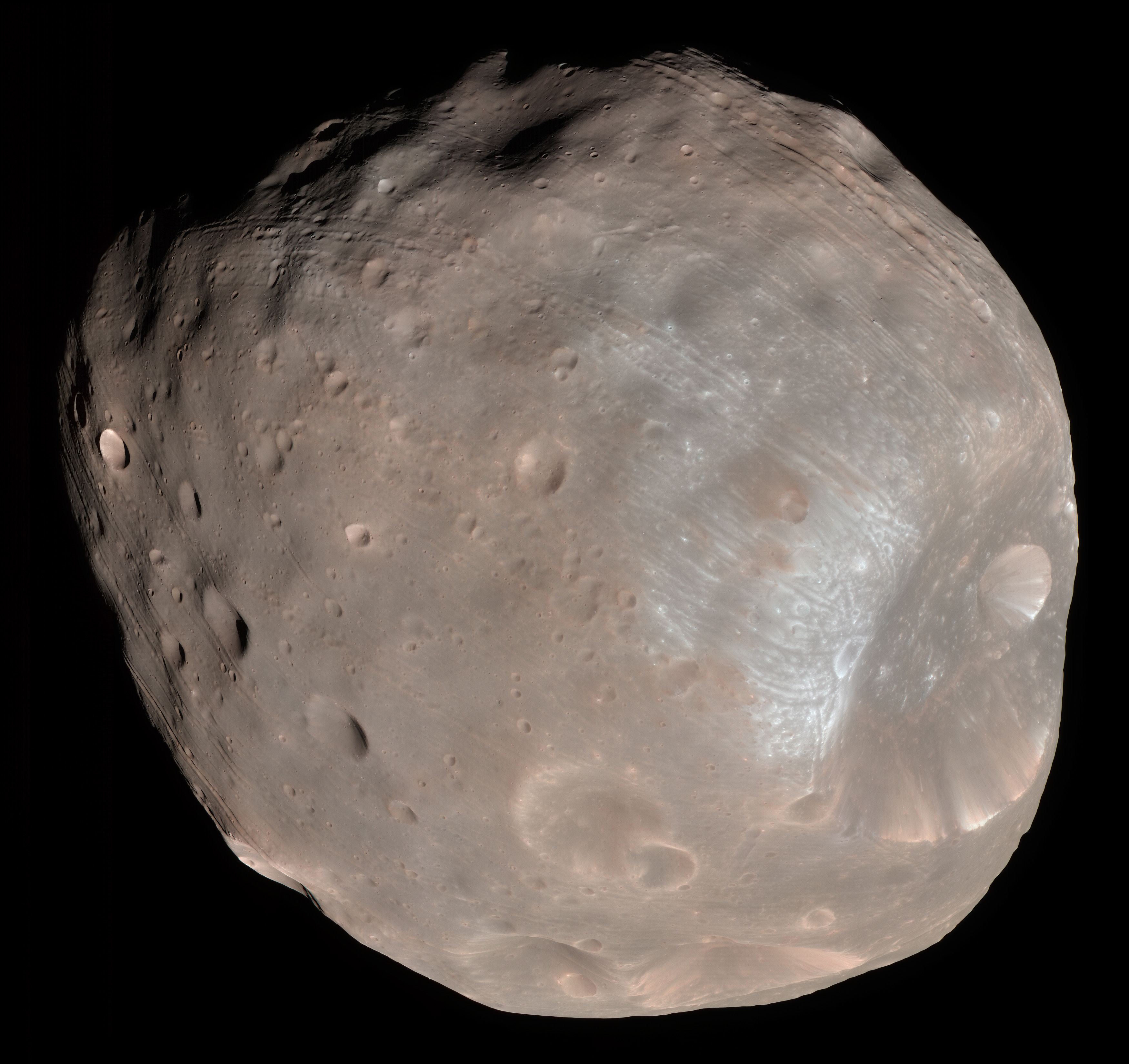
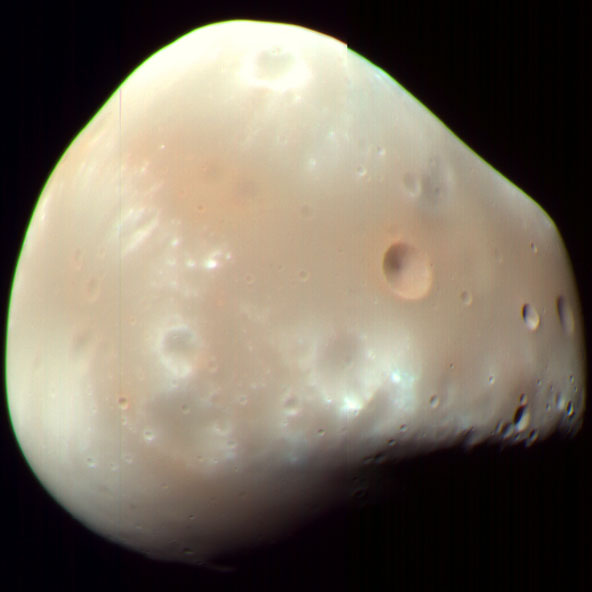
Here how a barchan dune on the surface of Mars looks like via HiRISE. Here’s how Phobos, and Deimos look like via HiRISE. Deimos, the farthest moon, is 23,460 km (14,580 mi) distant from Mars. The photos of the moons are gorgeous. However, the images of ISON are less than appealing because it was 460 times the distance Deimos is from Mars. Therefore, we see fuzzy images of ISON that are not that great.
Emily Lakdawalla from the the Planetary Society notes,
The images attempted by Opportunity and Curiosity are released in their raw form on the mission websites, but if the comet is visible in those images, it is lost in the compression artifacts. (The usual gang of image processors at unmannedspaceflight.com has been working to bring out any signal of the comet from the raw images, so far without success.)
Here is what ISON may look like in the raw images from Opportunity and Curiosity rovers with the compression artifacts removed. The final image is a distortion from what you would see here on Earth with a large telescope.
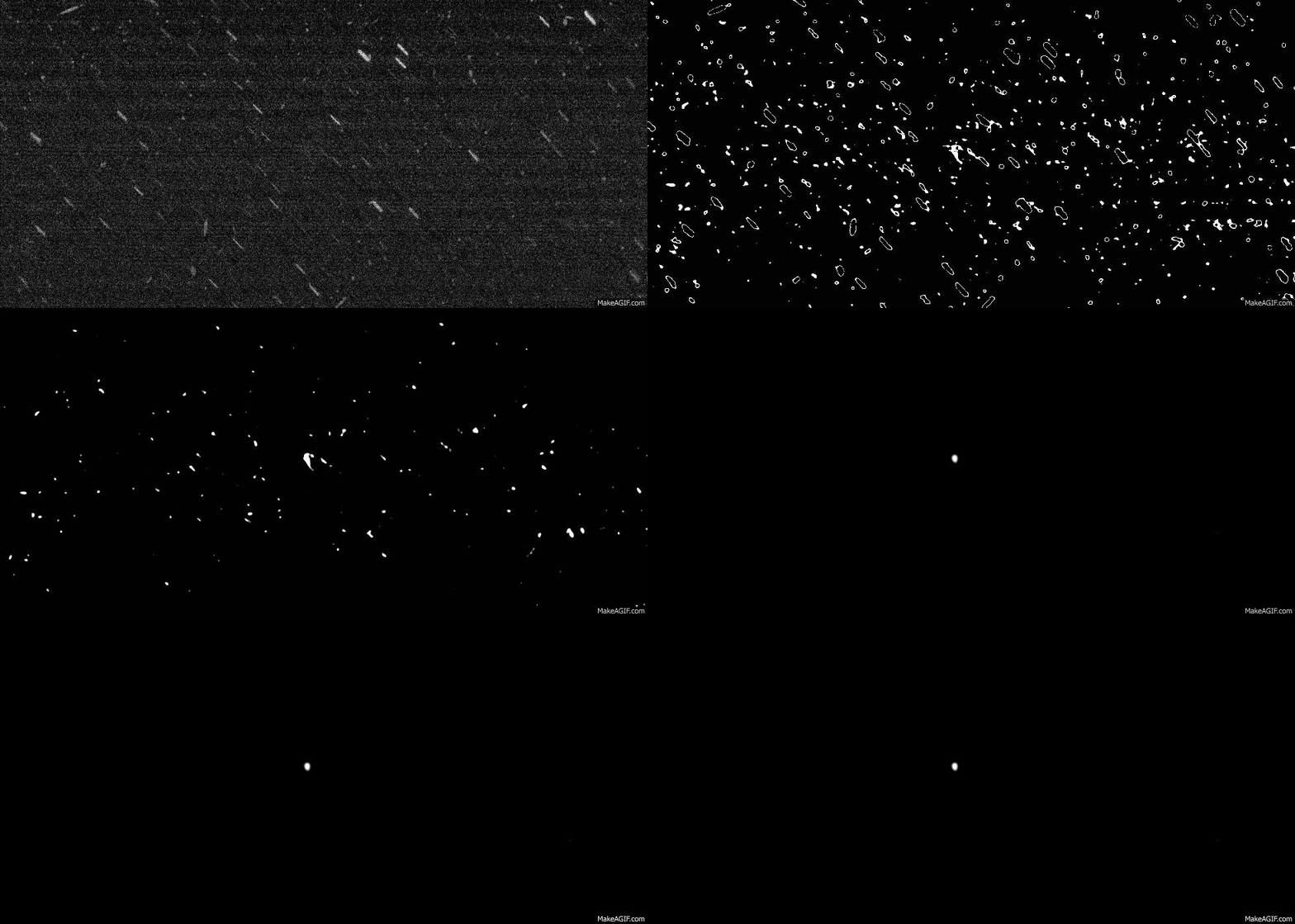
Image credits: FredK and Gerald from unmannedspaceflight.com
And another image:
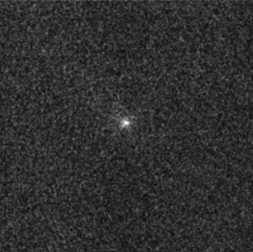
Image credit: FredK from unmannedspaceflight.com
Here are a couple of tweets about the images.
First HiRISE Images of Comet ISON – (Also available in Spanish, Portuguese, Italian, Icelandic) – http://t.co/pfyWL2WJ5Q
— HiRISE (@HiRISE) October 2, 2013
This is Comet #ISON Seen From Mars http://t.co/sAHZ52Nem3 #cometison #notmuchtolookat
— Comet ISON (@CometISONnews) October 2, 2013
By my count, 5 satellites have observed #ISON so far for the #CIOC: @NASAspitzer, @HubbleTelescope, MRO/@HiRISE, DI/Epoxi and SOHO/SWAN
— Sungrazing Comets (@SungrazerComets) October 2, 2013
Oh, I forgot @NASASwift! They also saw #ISON. So that's six spacecraft!
— Sungrazing Comets (@SungrazerComets) October 2, 2013
@NickAstronomer @NASA eye test tomorrow..:-)
— Andrew Davies (@ADavies915) October 2, 2013
Image credits: NASA/JPL/University of Arizona
Comet ISON captured by HiRISE,